Acertijo Mental: Brain Games
Kerun GamesTrivia
4.91.11K Reviews
- Version
- 2.5302
- Installs
- 10.00M
- Age Rating
- Everyone
Screenshots
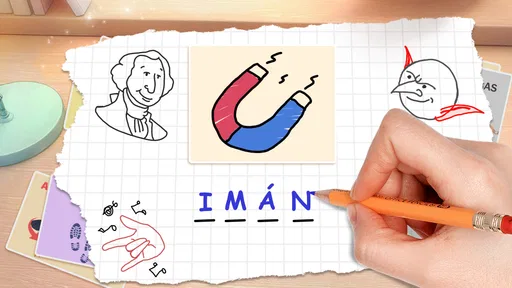
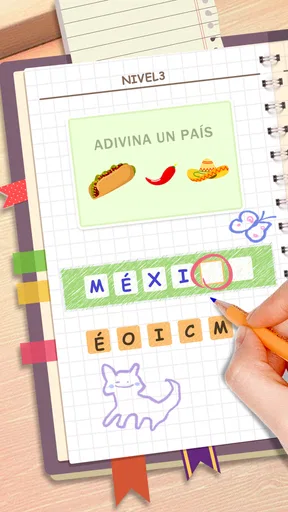
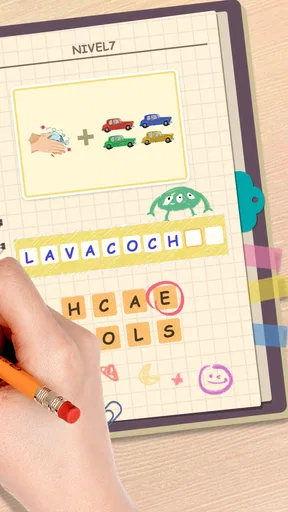
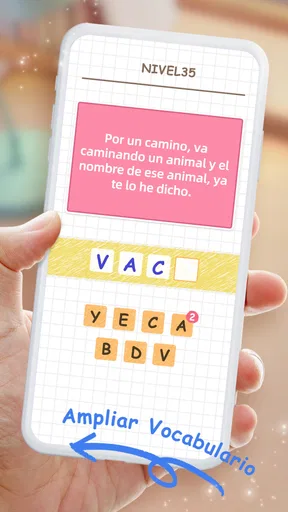
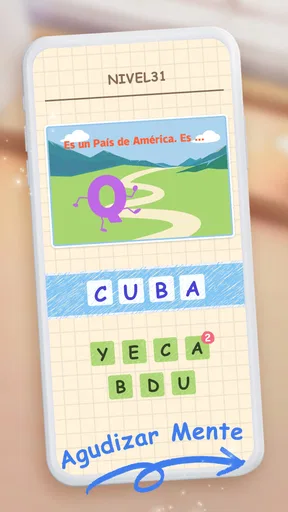
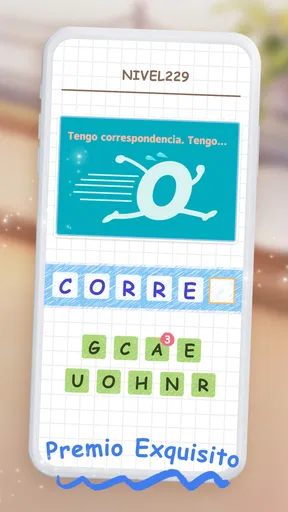
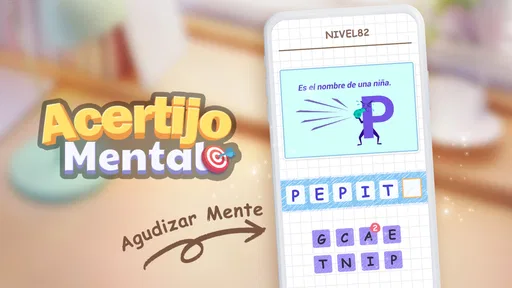
Our Review of Acertijo Mental: Brain Games
 Analysis by Appyee
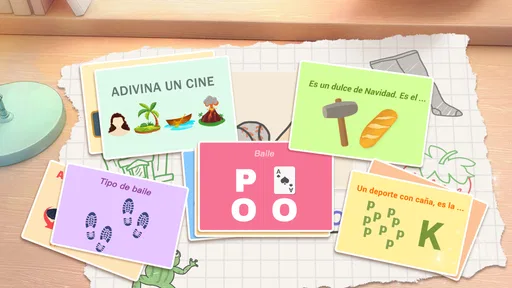
I spent time with Acertijo Mental: Brain Games as a quick-fire trivia and riddle game, and my first impression was clear: it is built for people who enjoy solving a small mental challenge whenever they have a spare moment. The basic idea is simple—read a clue, think through possible answers, and guess the word—but the appeal comes from how easily that loop fits into everyday routines. It is the kind of game I can open while waiting for an appointment, take a short break from work with, or use as a low-pressure way to keep my mind active.
Kerun Games has positioned it as a free game in the trivia category, with an Everyone content rating. That makes it an approachable choice for families and casual players who do not want an intense action game or a complicated strategy system. The store summary describes a difficult riddle or quiz experience focused on guessing words and sharpening the mind, but in practice the important question is whether that format suits your habits. If you like language puzzles and gradual problem solving, there is a good chance it will become a convenient pick-up-and-play title. If you prefer fast visual action, deep multiplayer competition, or a clearly defined story, its narrow focus may feel limiting.
How the puzzle experience fits into real life
The strongest part of the game is its low commitment. A riddle does not require the same attention as a long strategy match, and I never felt that I needed to prepare for a session before starting. That makes it useful in situations where I want entertainment but do not have the time or concentration for something more demanding. A realistic example is a commute with a few spare minutes: I can attempt a handful of clues, stop when I reach my destination, and return later without feeling that I abandoned a large task.
That short-session design also changes how I approach difficult clues. In a conventional quiz app, I might expect a fixed question with one obvious answer category. Here, a word puzzle can make me test several interpretations before committing. I found that the best way to play is not to guess randomly, but to separate the clue into parts: identify the likely subject, look for wording that suggests a synonym, and then consider whether the answer is a common word rather than an overly technical one. This method makes the game more satisfying and turns each failed attempt into a small reasoning exercise.
It is worth treating the title as a casual brain-training style game rather than a formal learning tool. Solving riddles can encourage vocabulary recall, flexible thinking, and attention to phrasing, but I would not use it as evidence of measurable cognitive improvement. Its value is more immediate: it gives me a reason to pause, think, and work through a problem without the pressure of a serious test. That distinction matters if you are choosing between this and an educational app designed around lessons or structured study.
The trivia angle gives the game broader appeal than a pure crossword-style product, although players should still expect the experience to revolve around clues and word guessing. I enjoyed the moments when an answer became obvious only after I changed my interpretation of the question. Those moments are the core reward. The game is less about memorizing a large body of facts and more about recognizing connections, reading carefully, and resisting the first answer that comes to mind.
What the free model means for a new player
The game is free to download and play, which lowers the barrier to trying it. That is important here because puzzle preferences are personal: some players love wordplay immediately, while others find riddles vague or frustrating. I can test the central experience without committing money first, then decide whether it deserves a regular place on my phone.
There are in-app purchases ranging from $0.99 to $29.99 per item. I see that as a reason to approach the game with a clear personal limit rather than assuming that every useful option is included at no cost. The free entry gives the title its main value for curious players, while paid purchases may appeal more to someone who plays frequently and wants to spend on the experience. I would not buy anything simply because a clue feels difficult; the challenge is part of the point, and a short break from the game can often be more satisfying than paying to remove every obstacle.
For families, the Everyone rating makes the game easier to consider as a shared casual activity, but the purchase range is still worth discussing if children use the device. I would set expectations before handing over the phone, especially because “free” describes access rather than a promise that every optional purchase is irrelevant. Adults who manage their own spending can simply treat the title as a free trial with optional paid value, which is a more accurate way to judge it.
The rating gives the game a strong first impression: it holds an average of 4.9 from around 557 thousand ratings, and it has more than 1.1 thousand written reviews. Those figures suggest that the format has connected with a large audience, though they do not guarantee that every riddle will match my taste or yours. A high average is useful reassurance when deciding whether to try a free game, but I still recommend judging it by the first several sessions rather than by popularity alone.
Where the game delivers genuine value
I think the best value comes from convenience. Many brain games demand a long session, a quiet environment, or a willingness to learn several systems. This one is easier to fit around ordinary life because its central action is immediately understandable. I do not need to master complicated controls before I can start thinking about the clue, and that makes it suitable for players who want mental stimulation without a large learning curve.
Another useful quality is the way a difficult clue can stay in my mind after I close the game. I sometimes find myself returning to a problem later with a better idea, which creates a different rhythm from simply tapping through a stream of easy questions. A practical technique is to read the clue once, form two or three possible meanings, and then step away if none feels convincing. Coming back with a fresh perspective is often more productive than repeatedly making the same guess.
The game can also work as a social prompt. I would not compare it to a full multiplayer party title, but showing a tricky clue to a friend or family member can turn a solitary puzzle into a short conversation. Different people notice different word associations, so a clue that stops me may be easy for someone else. That makes it a pleasant choice for a relaxed shared moment, provided everyone enjoys word-based challenges.
Its large install base—over 10 million installs—also means it is not an obscure experiment with no established audience. That does not tell me whether its individual puzzles are consistently excellent, but it does indicate that the basic concept has broad reach. For a free trivia game, that is a useful sign: the format is familiar enough to attract many players while still offering a distinct focus on riddles and guessed words.
I also appreciate that the age rating keeps the concept broadly accessible. Someone looking for a clean, uncomplicated puzzle to play around younger family members may find it more suitable than trivia titles built around mature humor, frightening themes, or competitive chat. The Everyone rating does not make it automatically perfect for every child, but it does make the starting decision simpler.
Tradeoffs that affect the experience
The same simplicity that makes the game welcoming can eventually make it feel repetitive. If I want varied genres, elaborate progression, or a story that changes with my choices, a riddle-and-quiz format will not provide that kind of depth. The central loop is intentionally focused, so its long-term appeal depends heavily on how much I enjoy solving word clues for their own sake.
Difficulty is another personal tradeoff. A challenging clue can create a rewarding breakthrough, but a clue that feels ambiguous can produce irritation instead. I found it helpful to distinguish between “I do not know this” and “I am reading this in the wrong way.” The first calls for knowledge or deduction; the second calls for reframing. If several puzzles in a row feel unclear rather than challenging, I would take a break instead of spending money to force progress.
Players who prefer factual quizzes may also find the wordplay emphasis less satisfying than a conventional general-knowledge app. A normal trivia question often tests recall of a person, place, event, or fact. A riddle asks me to interpret language, and the answer may depend more on seeing the intended connection than on knowing information. Neither approach is better in every situation. I would choose this game for flexible thinking and word association, while I would choose a traditional quiz app when I specifically wanted to test factual knowledge.
The purchase structure creates a second tradeoff. Free access is a meaningful advantage, but optional items priced from $0.99 up to $29.99 can change how different players perceive value. Someone who plays occasionally may never need to spend anything. A dedicated player may consider purchases worthwhile if they support a more comfortable routine. My advice is to decide what the free experience is worth before buying, then treat any payment as entertainment spending rather than as a requirement for improving your general knowledge.
Device compatibility is reasonably broad for an Android game because the listed minimum requirement is Android 6.0. That helps people using older phones, although a minimum operating-system version does not tell me how smoothly every device will perform. If your phone is much older, I would keep expectations practical and make sure it has enough free space and battery for regular use. The current version is 2.5302, so checking that your installation is current is sensible when troubleshooting ordinary app behavior.
Who will get the most from it
I would recommend this game first to casual puzzle fans who like language, clues, and the satisfaction of arriving at an answer without being rushed. It is also a good match for people who want something lighter than a competitive game but more engaging than passively scrolling. Students may enjoy it as a short mental reset between tasks, while adults can use it as a compact diversion during breaks.
It suits households looking for an easy game to discuss together, especially when players have different strengths. One person may spot a synonym, another may recognize a familiar phrase, and a third may notice the clue’s hidden angle. That collaborative quality is one of the less obvious reasons to keep a riddle game installed: it can create conversation without requiring everyone to commit to a full board game session.
I would be more cautious about recommending it to someone who wants a structured course, detailed explanations for every answer, or a competitive ranking system as the main motivation. It is also not my first choice for a player who becomes stressed by uncertainty in puzzle wording. In that case, a straightforward factual quiz, a crossword with a familiar grid, or a logic game with explicit rules may feel fairer and more rewarding.
For children, I would consider the Everyone rating a positive starting point, but I would still play alongside them at first. That lets me see whether the vocabulary is comfortable and whether the clue style is enjoyable rather than confusing. It also provides a natural opportunity to discuss answers instead of turning every puzzle into a test. The game works best when wrong guesses are treated as part of the process, not as a reason to rush toward a purchase.
My practical way to play
My preferred routine is to use it in short blocks and stop after a satisfying solve rather than chasing an arbitrary amount of progress. When a clue seems difficult, I first identify the key word, then list ordinary alternatives for it. I ask myself whether the clue is describing an object, an action, a person, or an idea. That small checklist prevents me from locking onto one interpretation too early.
I also recommend reading the exact wording aloud. Riddles often rely on emphasis or on a phrase that sounds different when spoken naturally. This is a useful trick when playing with another person, because saying the clue can reveal an association that silent reading missed. It turns the game into a small language exercise rather than a sequence of taps.
If you are deciding whether to spend money, give the free experience enough time to show its normal rhythm first. Do not judge the entire game by one unusually easy puzzle, and do not assume one frustrating clue represents everything that follows. I would only consider an in-app purchase after deciding that the core activity itself is something I genuinely return to. That approach keeps the free access valuable and separates enjoyment from impulse spending.
Compared with the usual alternatives, this title sits between a standard trivia quiz and a classic word puzzle. It is less about collecting facts than a general-knowledge app, and less dependent on a fixed board or grid than a traditional crossword. That middle position is its identity. It will not replace every type of brain game, but it can fill the gap for someone who likes questions with a twist and wants a flexible mobile format.
My verdict on value
After using it, I see Acertijo Mental: Brain Games as an easy recommendation for trying a free riddle game, not as a universal replacement for every trivia or brain-training app. Kerun Games keeps the premise accessible, and the broad audience reflected by its rating and installs suggests that the idea works for many casual players. I especially value the quick sessions, the need to reinterpret clues, and the way a difficult answer can become a small shared challenge with someone nearby.
The limitations are just as important. The focused format may lose its appeal if you need constant variety, formal learning, or highly transparent rules. Optional purchases from $0.99 to $29.99 per item mean that free access should be judged separately from paid value, and I would keep spending strictly optional. For me, the best reason to install it is that it offers a convenient mental pause without demanding a major time commitment.
My recommendation is to try it for free if word riddles sound enjoyable, then keep it only if the solving process—not merely the idea of brain training—makes you want to return. With its Everyone rating, broad Android compatibility beginning at version 6.0, and current version 2.5302, it is accessible to a wide range of players. I would skip it if you want action, deep strategy, or a serious educational program, but for a quick clue, a thoughtful guess, and an occasional “now I see it” moment, it offers a worthwhile casual option.
Verdict
Strengths of Acertijo Mental: Brain Games
- Short puzzles are ideal for quick breaks or daily brain-training sessions.
- The variety of riddles helps prevent the gameplay from feeling repetitive.
- Simple controls make it accessible for casual players of different ages.
- Progress tracking can encourage regular play and personal improvement.
- Most challenges can be enjoyed without requiring advanced gaming skills.
Limitations of Acertijo Mental: Brain Games
- Some puzzles may rely on wordplay that is difficult for non-native speakers.
- Difficulty can vary noticeably between consecutive challenges.
- Hints may reduce the satisfaction of solving puzzles independently.
- Repeated puzzle styles can eventually make the experience feel predictable.
- Ads may interrupt the flow, especially during longer play sessions.
Other Releases by Kerun Games
View All
Similar Picks in This Category
View All
Millionaire 2026 Quiz & Trivia
Quiz & Trivia Games by Submarine Apps4.5

Brain Test 2: Tricky Stories
Unico Studio4.7

Trivia Crack: Brain Quiz Games
etermax4.4

QuizzLand. Quiz & Trivia game
Quiz & Trivia Games by Mno Go Apps4.8

Brain Test: Tricky Puzzles
Unico Studio4.7

Logo Quiz
bubble quiz games4.5
Frequently Asked Questions
What is Acertijo Mental: Brain Games?
Acertijo Mental: Brain Games is a puzzle and brain-training app focused on riddles, logic challenges, and mental exercises. It is designed to test your reasoning, memory, attention, and problem-solving skills through short activities that can be played casually. The difficulty may increase as you progress, making it suitable for quick sessions or longer periods of concentrated play.
Is Acertijo Mental: Brain Games suitable for all ages?
The app can be entertaining for teenagers and adults, as well as younger users who are comfortable reading and solving logic-based questions. However, some riddles may use wordplay, cultural references, or concepts that are easier for older players to understand. Parents should review the content and any advertising or in-app purchase options before allowing children to play independently.
Does Acertijo Mental: Brain Games require an internet connection?
Some parts of Acertijo Mental: Brain Games may work without a constant internet connection, particularly previously loaded puzzles and basic gameplay. Nevertheless, an internet connection can be required for downloading new content, synchronizing progress, displaying advertisements, accessing rankings, or restoring purchases. Availability of offline features may vary depending on the version, device, and updates installed.
Are there advertisements or in-app purchases in Acertijo Mental: Brain Games?
Users should check the app’s current store listing for the exact monetization details, because advertising and purchase options can change with updates. Puzzle games commonly include ads between challenges or optional purchases for hints, extra lives, or an ad-free experience. Before downloading, review the permissions, pricing, and purchase settings to avoid unexpected charges.
What are the main advantages and possible drawbacks of the app?
Acertijo Mental: Brain Games is appealing because it offers quick challenges, encourages logical thinking, and provides a convenient way to pass time while exercising concentration. Its main drawbacks may include repetitive gameplay, puzzles that occasionally depend on tricky wording, advertisements, or limited variety after extended use. Players who prefer deep strategy games may find the experience relatively simple.
Play our best games!


